

An AI agent that reviews supplier invoices might start by reading PDFs and drafting discrepancy reports. Connect it to an enterprise resource planning (ERP) system, and the same workflow can also update invoice records. That change affects who can authorize a transaction, which information the agent can access, and what evidence the organization needs if something goes wrong.
AI agent security is the practice of protecting the systems, data, and business processes an agent can access or change. For enterprise teams, three questions anchor the review. What can the agent do? Who authorizes each consequential action? Can the organization reconstruct what happened?
Why AI agents change the security risk
An AI agent can select tools and take steps toward a goal within the permissions it receives. Those tools might search a document repository, read a CRM record, or write to a ticketing system. The impact of an error depends on the tool, the permissions available at the time, and whether the action is reversible.
OWASP’s agentic AI security guidance describes risks such as manipulation of an agent’s goal, misuse of connected tools, abuse of identity or privileges, and poisoning of memory or context. [1]
| Risk | What it can look like in a business workflow | Control to verify |
|---|---|---|
| Indirect prompt injection | A supplier document contains text that could influence the agent’s next action. | Treat retrieved content as untrusted data and enforce tool permissions outside the model. |
| Tool misuse or excessive permissions | An agent with access to several systems attempts an action beyond its assigned task. | Give each workflow a dedicated identity with narrowly scoped permissions. Enforce authorization at the tool or service boundary. |
| Memory or context poisoning | An unverified statement is retained and influences later decisions. | Restrict persistent memory writes and retain information about the source and review status of stored records. |
| Cascading failures | An incorrect classification triggers further automated actions in connected systems. | Limit execution steps and retries, and pause the workflow when an action falls outside defined thresholds. |
An AI agent security checklist before production
- Record the approved use case. Maintain an inventory entry with the business owner, intended purpose, connected tools, data categories, authorized actions, and deployment environment. Assign responsibility for approving material changes.
- Define permissions by action. For each connected system, list what the agent can read, write, or send. Use read-only access where the task allows it. Enforce restrictions in the integration layer or destination system, where authorization can be checked independently.
- Require meaningful human approval for sensitive actions. Show the reviewer the proposed action, affected record, and relevant supporting evidence. Make approval specific to that action. Recheck authorization if the record or transaction details change before execution.
- Keep a record of actions and decisions. Capture the workflow ID, tool invoked, action requested, approval or denial, and execution outcome. Define retention and access controls so logs support investigation without collecting unnecessary sensitive content.
- Test the controls and rehearse recovery. Before launch, verify that unauthorized actions are blocked and that an approved action can be traced back to its reviewer. Confirm that the team can pause the workflow, revoke access, and correct or reconcile affected records when needed. Repeat relevant tests after material changes to permissions, tools, or data sources.
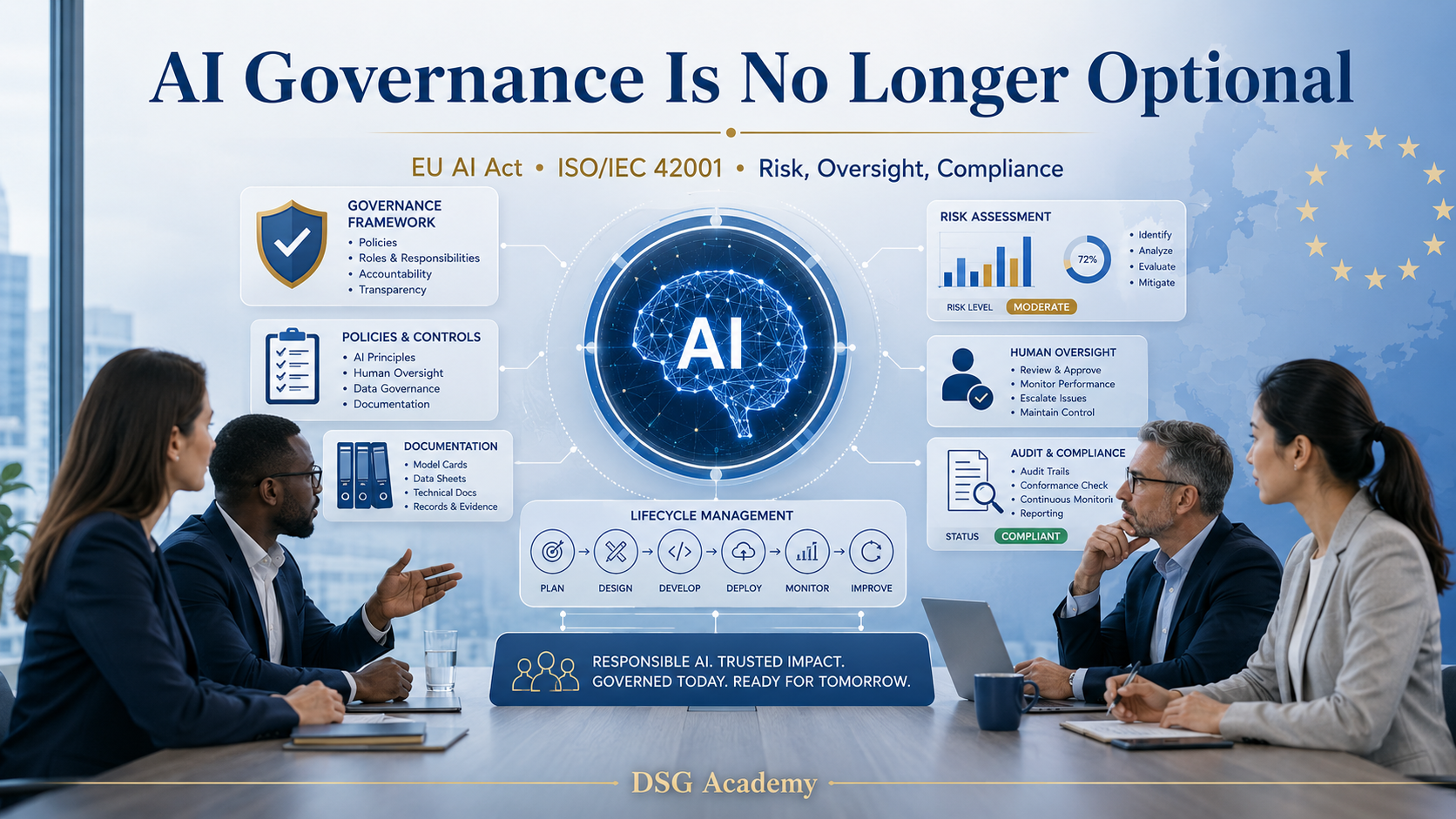
These steps put the Govern, Map, Measure, and Manage functions of the NIST AI Risk Management Framework into practice. OWASP’s agentic security guidance can inform which technical risks the team examines during the review. [1, 2]
Example of securing a procurement AI agent
A procurement team wants an agent to compare invoices with purchase orders and flag discrepancies. The approved workflow gives the agent read-only access to the invoices and the relevant ERP records. Its output is a draft exception ticket with links to the source records.
The agent has no permission to change supplier bank details or release payments. Any later proposal to give the agent write access goes through change approval. The business owner identifies which ERP fields can be updated, which changes require a separate reviewer, and who can pause the integration if it behaves unexpectedly.
Before launch, the team gathers the approved use-case record, a test result showing that an unauthorized update is blocked, and an execution log showing which records the agent read and which ticket it drafted. This gives an auditor a way to compare the approved design with observed behavior.
How ISO/IEC 42001 and ISO/IEC 27001 support AI agent security
ISO/IEC 42001 specifies requirements for an Artificial Intelligence Management System (AIMS). For an AI agent, the AIMS can provide a structure for assigning ownership, defining intended use, conducting AI risk and impact assessments, and reviewing changes over time. [3]
ISO/IEC 27001 specifies requirements for an Information Security Management System (ISMS). The ISMS can cover the information security risks introduced by the agent’s access to business data and connected systems. Depending on the risk assessment, this may include access management, logging, supplier security, and incident response. [4]
If an organization already operates an ISMS, the agent’s technical access review can use the existing access management process. The AI governance review can then address whether the agent’s purpose, degree of autonomy, and oversight are appropriate for the business process. A single change record can capture both reviews and their approvals.
Frequently asked questions
What is the first step in securing an AI agent?
Identify what the agent can access and what changes it can make in each connected system. Record who owns those permissions and which actions require approval. That inventory makes it easier to prioritize controls according to potential impact.
Is ISO/IEC 42001 an AI agent security checklist?
No. ISO/IEC 42001 sets requirements for an AI management system. Organizations can use it to govern how agents are approved, monitored, and reviewed. OWASP’s guidance helps teams identify agent-specific technical risks and decide what to test. [1, 3]
What evidence should an auditor review for an AI agent?
Start with the approved use case, the risk assessment, the current permission configuration, test results, and a sample of actual execution logs. Compare the approved limits with observed behavior and follow up on any discrepancies.
Training in AI governance, AI risk and information security
If you are responsible for AI agents in your organization, these DSG Academy courses build the related skills:
- Learn how to plan, implement, and improve an AI management system with the PECB ISO/IEC 42001 Lead Implementer course.
- Develop skills in planning AI management system audits and evaluating evidence with the PECB ISO/IEC 42001 Lead Auditor course.
- Learn to identify, assess and treat AI risks using the NIST AI RMF and the EU AI Act with the PECB Lead AI Risk Manager course.
- Explore how to implement and improve an information security management system with the PECB ISO/IEC 27001 Lead Implementer course.
Looking for training focused specifically on AI security? Contact DSG Academy and we will help you find the right option.
References
- OWASP GenAI Security Project. OWASP Top 10 for Agentic Applications 2026.
- National Institute of Standards and Technology (NIST). Artificial Intelligence Risk Management Framework (AI RMF 1.0). NIST AI 100-1.
- ISO and IEC. ISO/IEC 42001:2023 — Artificial intelligence management system.
- ISO and IEC. ISO/IEC 27001:2022 — Information security management systems.